Chaos and Kanji is the blog where I write about my adventures through Japan!

Want Lists are located here. NPB Baseball Want List is located here.
Showing posts with label books. Show all posts

Tuesday, January 4, 2022

Books I Read in 2021

2021 Unlisted Goal: Reading. I wanted to read last year, as I did in 2020. I only managed five books, and I think that's due to a couple reasons. First, most of my reading time is on trains. I've only been riding trains about once a month, and the majority of that journey has free wifi, so I've been using that time to catch up on other media or online tasks. Second, the books I've been trying to read have been fairly uninteresting.

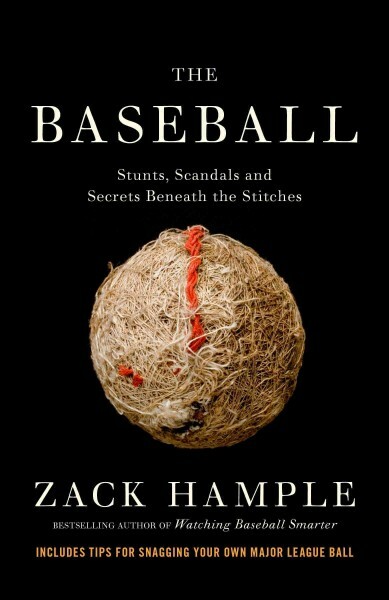
The first book I read was The Baseball by Zack Hample. It was an okay read at the time, but unmemorable. I really couldn't tell you anything about the book now. In March I read a trivia book called Out of Left Field; those are quick and entertaining and usually result in me being inspired to pick up some cards or even start a while new mini collection.

But after that was What About the Villa, the story of one season of a baseball league in England. It was heavily researched and I feel like it was well-written, but a large part of the book is a nearly game-by-game recount of the season, which gets really monotonous, especially with no prior knowledge of or stake in any of the teams or players prior to reading the book. I got through it in about a month, thanks to more free time on trains during spring break.

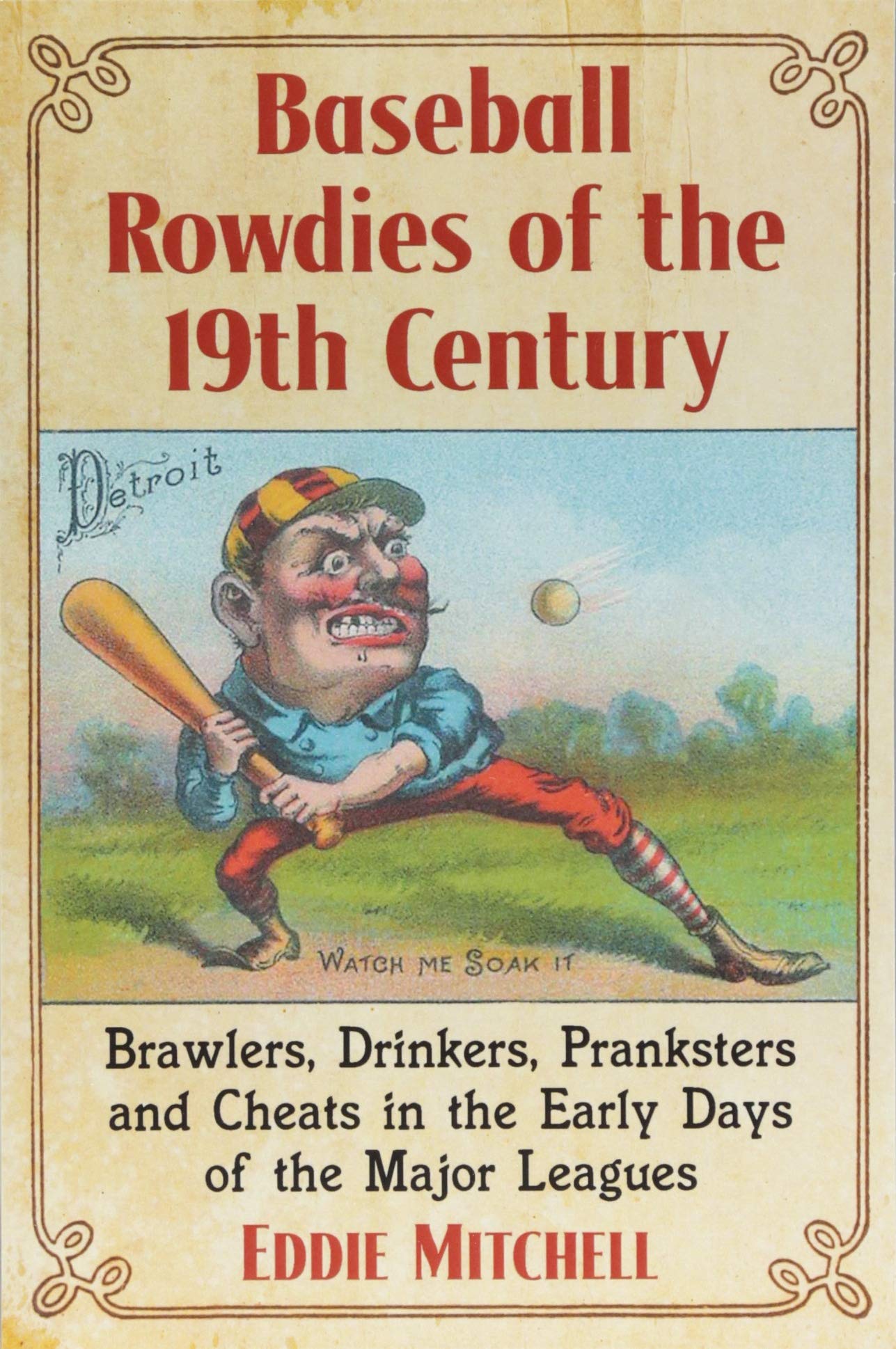
It was several months before I could finish another book: Baseball Rowdies of the 19th Century. This should have been a fast read, as it's another collection of trivia. But rather than tell interesting anecdotal stories, it's basically a list of players with a list of their "crimes" like you might find on the back of a baseball card. I think some players were repeated, since there was no good organization and just so much information. Mile wide, inch deep. It could serve as a good resource for moving into a more detailed accounting of some of the most interesting players or events.

I did fly through another book in November. The Utility of Boredom is a collection of baseball essays which I read while traveling around Kyushu. I only read five books this year, but Utility is the best of the bunch. Thanks to it being a collection of essays, it's easily digestible, but still has an aspect of storytelling. I can't say I have a favorite essay, but each one paints a good picture of why baseball is so great. 

Until next time...

Sunday, May 16, 2021

Discovery: 2011 Pro Yakyu Data File Weekly Baseball Reprint and Rookies Card Set

BBM doesn't just make cards. Their name is "Baseball Card Magazine" after all. They are responsible for the now-defunct SCM, several magazine specials a year, and Weekly Baseball (週刊ベースボール, Shuukan Baseball).

The first issue of Weekly Baseball had a cover date of April 16, 1958, though it was released in March. It actually was a rebranding of Baseball Magazine (ベースボールマガジン), which was first released in April 1946. The company Baseball Magazine gets its name from this periodical. Weekly Baseball passed the 3000-issue milestone back in 2010.

Bonus fact: in 2015, BBM bought the naming rights to a baseball stadium in Niigata Prefecture for 1 million yen per year (about $10,000/year). 

In August of 2011, BBM reprinted the first issue of Weekly Baseball. The magazine was included in this box:

The top says "Pro Yakyu (Baseball) Data File". Pro Yakyu Data File is another magazine published by BBM. If I understand correctly, this box was a gift for subscribing to Pro Yakyu Data File.
Here's the cover, featuring Shigeo Nagashima and Tatsuro Hirooka.
For the most part, the magazine was replicated exactly like the original, down to the photos and ads. Phone numbers and addresses have been removed, but prices remain intact.
There's a lot of focus on Giants players, but there are some articles on the other teams.
A large portion of the artwork is hand-drawn. Vintage Japanese publications have a lot of hand-drawn design elements. It was fun to flip through and enjoy the vintage, black and white pages, even if I can't really read it.
The inside of the box also held a set of special baseball cards split into two subsets.

The first subset is 2011 Big Hope Rookies, featuring the top rookies of, well, 2011. Yuki Saitoh was probably the biggest name then, but Yudai Ohno also makes an appearance in this series.

The second subset is titled Legend Super Rookies and features retired players who had outstanding rookie seasons. Naturally, Shigeo Nagashima is included.

 I didn't know about the existence of this set until NPB Card Guy came across it and asked me to find one for him. I was able to get another for myself soon after! I've had this for a few months, but I'm just now getting around to posting it.

As always, I must wonder how many other sets are out there which remain uncatalogued. 

Until next time...

Tuesday, April 28, 2020

Book Review: Wally Yonamine

One last book review from March. Seriously, I read four books and never wrote about them! Wally Yonamine: The Man Who Changed Japanese Baseball by Rob Fitts came to me through a Mercari purchase of all things. It's the first book by Fitts I've read, though I also have his book Mashi: Masanori Murakami, which I picked up when both Fitts and Murakami made an appearance in Tokyo a few years ago. He's written a few more books on Japanese baseball, collects Japanese baseball cards, and sells cards on eBay, too. (Not right now, due to stay-at-home orders. But usually.)
Wally Yonamine is a man of firsts: he was the first Japanese American to play in the NFL (for the San Francisco 49ers) and the first American to play baseball in Japan after World War II, for the Yomiuri Giants. He was the first foreign manager in NPB, with the Chunichi Dragons. He brought more-aggressive baseball to Japan, playing for the strongest, most popular team in Japan. He won countless awards and was inducted to the Japanese Baseball Hall of Fame in 1994 - the only American in the Hall as a player.

This book is the definitive record of Wally Yonamine's life. Fitts did his homework, interviewing players, friends, family members, and Yonamine himself. Fitts is most concerned with Wally's baseball career, but he also talks about his upbringing, his football career, Pearl Harbor, and stealing watermelons. We read about his efforts on the diamond and his relationships with his wife and children.

Overall, this book is extremely well-written. It is a passion project, that is obvious. My only minor complaint is the change in style in the last chapter, titled Hall of Fame. For the first 20 chapters of the book, Fitts talks about Yonamine as a third person, telling the story of his life. Chapter 21 continues that story, but this is the point where Yonamine enters Fitts' life, and the book turns first person for a while. And from history to praise. I only wish Fitts had split that chapter in two, talking about Yonamine's post-baseball life (which never really ended; he was involved with the Master League even in 2008, in his 80s) in a chapter, and sharing his personal story and Yonamine's legacy in an epilogue or afterword. It's still a great book.
I have a few Yonamine cards laying around, but no definitive card. As I've been doing with other players I've read about, I'm on the lookout for a good card to represent the book. I've got my eyes on some vintage cards, but until then, here's a card of him sliding in to home.

And with that, I've gotten caught up on books. I haven't been reading these past couple weeks, so I have some catching up to do. My vacation starts tomorrow, so vacation #1 is traveling back in time over 100 years, again.

Until next time...

Book Review: The Mick

The first autobiography I can remember reading since... college? The full title here is: The Mick: An American Hero, The Legend and the Glory. It's written by Mickey Mantle himself, with Herb Gluck.
I'm not that old. Mickey Mantle is another one of those old Yankees stars that I didn't really know about. I knew he was a switch-hitting power hitter during the Yankees 1950s dynasty. I knew he had bad knees and was a spokesman for Upper Deck in the '90s.

This is the smallest book I've read so far this year. It has 260 pages, but it's smaller, and written in a very casual, simple way.

It's Mickey Mantle, telling his story. As such, there's a good bit about Mantle's life behind the scenes. Mickey talks about his childhood and teenage years in Oklahoma. He talks about his pastimes, schooling, girls, and his family's financial difficulties.

As he moves into his career, he talks a lot about his teammates and life off the field. He mentions his performance on the diamond, but he approaches his accomplishments with a self-deprecating attitude.

He comes across as a good ol' boy, and I'm not sure if that's who he really was or if it was an image created for the book or publicity in general. Mantle talks about partying and hanging out and generally having a fun attitude, and based on what I read in October 1964 I have to believe him. So maybe he really was a fun-loving simple guy who loved to play ball.

I think I finished this entire book in just two days, with about two to three hours of actual reading time. So it's very easy to read. But like the other books I've been reading, it has a good narrative and it's possible that Mickey wrote his own movie; I could see this book turned into a biopic. The only problem - Mickey tells some interesting short stories, but there are fewer scenes than summaries here.
It is a New York Times bestseller, written back in 1985. Thirty-five years later, there isn't much new to add to Mantle's life. Mantle shows he is a product of his time, though; there's a lot here that might not be published in a book today.

Monday, April 27, 2020

Book Review: You Gotta Have Wa

A surprisingly easy read, You Gotta Have Wa by Robert Whiting examines life as a foreign baseball player in Japan.
This book was first written in 1989, and it is still being printed today. That tells you how good it is.

Life in Japan isn't easy for foreigners. We are often considered temporary visitors here to serve a specific role. I'm an English teacher, and as such not considered to be someone who would live here permanently. The Japanese way is considered difficult for foreigners to udnerstand. And it is; likewise, the American way can be difficult for Japanese people to get used to.

Foreign baseball players in Japan also serve a certain role. Many times they are called "suketto", which basically means helper. A player like Cecil Fielder is expected to hit the long ball. While foreigners have taught a thing or two to Japanese players, game strategy and practicing style remained unique to Japan.

Have you seen the 1992 movie Mr. Baseball, starring Tom Selleck? It's almost forgettable, but there is a lot of truth in what you see in the movie. Selleck's character receives uniform #54, because that is how many home runs he is projected to hit. The manager hits one of his players in the head for making a mistake. The team doesn't know how to have fun; baseball is war. Some players know a little English, but improperly use it or only know catchphrases and insults. The team practice is grueling; at one point Selleck's character is training but isn't allowed to hit. And of course, he has difficulty off the field with customs and culture.

That movie was probably written based on You Gotta Have Wa. Whiting tells stories, as he attempts to help the reader understand life and baseball in Japan.

Japanese managers hit their players. Physical abuse still exists in the workplace and at home; I've had a parent give me permission to hit their child if they misbehaved, and I've seen a grown man repeatedly hit another on a train.

Saving face is important here. The manager is the boss and not to be questioned. Sensei knows best.

Practice in Japan is an exercise in exhaustion. Literally. Players are forced to undergo drills until they collapse from exhaustion. Thousand ball fielding drills, running drills, throwing drills, hitting drills.

There are lots of customs here foreigners might not know about - pouring drinks for others but not yourself, bathing etiquette, chopstick etiquette...

Japanese baseball philosophy is rooted in its history. Until fairly recently, Japan was a country of fighters: samurai, shoguns. Sumo wrestling is Japan's only real sport. And many of Japan's earliest baseball players had this fighting spirit and a focus on morals, constant work, and will. "Indeed, the emphasis on 'making the effort' was so strong in Japan that how hard a man tried was considered by many to be the ultimate measure of his worth. Results were almost secondary."

Japanese workers go to the office and work long hours, but a recent article suggests that they don't really do much at the office. It's about showing you are at the office as long as the boss is, not how much work you actually do. Many employees right now are having difficulties working from home because they have mastered looking busy, but don't actually do much, or can't work on their own.

As someone who has been living in Japan for over eight years, I can relate to many of the difficulties and cultural clashes experienced by ex-pats playing ball here. But at the same time, I can see that a lot has changed in Japan. 1989 was the middle of Japan's bubble economy era - a time of great growth in real estate and the stock market, when Japan felt it was better than everyone else. Actually, that sentiment still remains with many.

But in recent years, the number of foreigners living in Japan has increased. The internet and an increase in international business has brought western culture into Japan as more than just a novelty. And where even twenty or thirty years ago the idea of a pitching rotation didn't exist in Japanese managers' minds, they use a six-starter rotation now.

The book is thirty years old and as such is a bit outdated in terms of modern Japan, but that doesn't mean it's not still valuable as a cultural tool. And for those interested in Japanese baseball, it's a must read. I'd love to see a follow-up to this with a look at how Japanese baseball has changed since 1990. Whiting also wrote The Chrysanthemum and the Bat, so I'll have to keep an eye out for that.

Book Review: Willie Keeler

One of the greatest things about reading all these sports history books is my increased interest in players from before my time. As I learned about the ballplayers of 1964, I started picking up cards for the ones who interested me. And Red Smith's book may not have been the most appealing, but I still gained a bit of appreciation for some of the stars found in other sports. Satchel Paige was always some mythical legend to me, but after reading about him I really appreciated his love of the game.

Last month (boy, that was long ago), I shot through about one book per week. March involved long commutes by train, so I had plenty of time for page turning. So, after finishing the Red Smith compilation, I turned to Willie Keeler: From the Playgrounds of Brooklyn to the Hall of Fame, by Lyle Spatz.
This book is quite long, especially for a biography of a player who was on the field over 100 years ago. Lyle Spatz works for SABR, and has written several other baseball books and articles. You're looking at three hundred pages, and this is no pulp novel, either.

The book is broken up into five parts, representing his time before and after baseball and the three teams he played for.  But despite the title of the book, only about 20 pages are given to Keeler's upbringing and early life, and another 20 pages about his life after retirement. So you're looking at a lot of baseball.

Spatz writes a great deal about the teams Keeler is on, and the book follows several characters throughout Keeler's career, as many of them come back after changing teams or leaving baseball altogether.  Not only are you reading about Willie Keeler, but you're also learning about John McGraw, Hughie Jennings, Joe Kelley, and other members of the 1890s Orioles. And the early history of the Superbas (later the Dodgers) and the Yankees, as Keeler was on all of those teams.

One thing Spatz does throughout the book is discuss individual game results. There is a lot of detail here, as these singular events help the reader understand Keeler and his teams better. It took some getting used to reading what amounts to 100-year-old play-by-play accounts, but as I got deeper into the book I started to appreciate how they helped tell Keeler's story.

There is a lot of reverence in Spatz's writing, and while he admits the 1890s Orioles were a rough team, he glorifies the violence. Granted, much of what he wrote about continued on for the better part of a century, or continues to this day. Keeler is set aside as a gentleman, though, one who generally didn't play such dirty baseball.

Another thing you will find in this book is a lot of general history. Keeler played during the days of the American Association, the formation of the American League, and the Federal League. There is a lot about how these leagues affected the game and the teams Keeler played for.

I certainly appreciate Keeler now; he was just some old player who had the longest hitting streak before DiMaggio.

Honestly, this is a long read. If you are interested in turn-of-the-century baseball, then definitely pick this one up. I learned a lot about Keeler, the early Orioles, Superbas, and the beginning of the Yankees, plus baseball history in general. Not my favorite book, but it was interesting enough to keep me reading until the end.
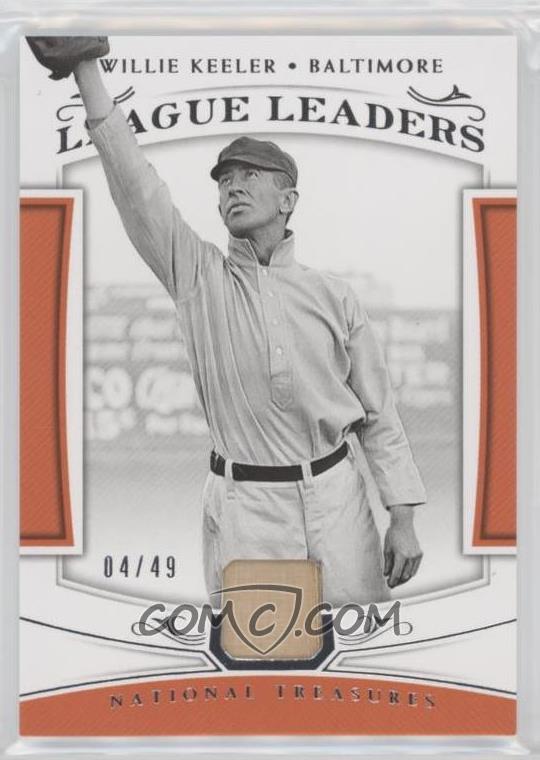
I picked up this Keeler relic for my collection after reading this book.

Get ready for three more of these posts! All that reading means a lot of writing! See you in 12 hours...

Wednesday, February 26, 2020

Book Review: Press Box: Red Smith's Favorite Sports Stories

Red Smith is considered one of the greatest sportswriters of all time. I can't say I've read any of his work, other than this book's foreword. And in that foreword, Smith claims that the works included aren't necessarily the greatest, but that they are enjoyable.

Press Box is a digest of sports stories, as you might gather. The stories were originally found in newspapers, magazines, and books. And all are fairly long - all 18 stories average about 10 pages each. Some are written by sportswriters, others by other authors. Some written literally as the events unfolded in front of them, others compiled decades after the stories were first created.

"Dempsey vs. Carpentier" follows a major boxing event; the story begins describing patrons flowing into the arena to take their seats, moving through all of the lesser fights bit by bit, before reaching the big fight everyone came for. Written by Irvin S. Cobb, it was an interesting read that painted a vivid picture of the day; his words really help the reader visualize not only the match itself but the surroundings and atmosphere. Cobb wrote the story on the spot, with individual portions being sent as they were written to the newspaper to be prepared for publication.

On the other hand, Red Grange's story was told in "The Ghost of the Gridiron" by W.C. Heinz nearly 40 years after Grange played football in Chicago. Grange wasn't necessarily proud of his accomplishments on the field, and that sentiment is portrayed well in Heinz's biography.

This is a sports story book, and most of the stories aren't baseball. But there are a few:

"The Best Team Ever" idolizes the 1927 Yankees, while the 1962 Mets are called "The Worst Team Ever". Grantland Rice wrote "The Big Fellow" when creating a tribute to his friend, Babe Ruth. And Ted Williams' final game was reported on by John Updike.

The topics are some of the biggest in their respective sports, especially early in the book. But I'm not jaded; I'm glad to read yet again about the 1927 Yankees. And I'm happy to hear even more about Babe Ruth, despite him being mentioned in almost every single baseball book ever written. I've never read about boxing or football, either.

The writing, however, leans toward hyperbole. When you're writing about the "greatest" or the "worst" in a sport, and when you're trying to paint a certain picture of your subject, the language and writing style becomes almost formulaic. A nearly-Sopranos episode-style ending. The 18 stories in the book all look at the greatest or the worst. There's so much amazement. Such attitude, talent, and pride.

With 18 stories by 18 authors, each "chapter" has its own style and flow. And this is seen most in "Dempsey vs. Carpentier". Here's an example:
Conspicuous at the front, where the lumber-made cliffs of the structure shoal off into broad flats, is that type which is commonest of all alongside a fight ring. He is here in numbers amounting to a host. There must be thousands of him present. He is the soft-fleshed, hard-faced person who keeps his own pelt safe from bruises, but whose eyes glisten and whose hackles lift at the prospect of seeing somebody else whipped to a souffle. He is the one who, when his favorite pug is being hammered to a sanguinary Spanish omelet, calls out: "That's all right, kid, he can't hurt you." I see him countlessly repeated. For the anonymous youths who in the overtures are achieving a still greater namelessness by being put violently to sleep he has a listless eye. But wait until the big doings start. Then will his gills pant up and down as his vicarious lusting for blood and brute violence is satisfied.
This paragraph is describing the fans attending a boxing event. Reading this particular story was painful. I had to read entire paragraphs multiple times just to understand what is happening. That paragraph, and the fight it attempts to describe, happened in 1921, nearly 100 years ago. Did the people of 100 years ago use words like hackles? saguinary? vicarious? My autocorrect dictionary doesn't even recognize countlessly or namelessness.

It is writing like this that made me put down the book. I just had no interest in reading about sports I don't have an interest in, in a headache-inducing style, full of over-importance. To be fair, most of the book is written more accessibly. But every article puts its subject on a pedestal. Every subject is an idol to be worshiped.

I read all of the baseball stories and a few from other sports. But I've found myself having no interest in reading many of the others. Too much toasting, not enough meat. In the end, the writers were too invested in glorifying their subjects. Perhaps if I had read one chapter - one story - every month from this book, I could have enjoyed it more.

Let me sip my Jack and Coke. Don't force your straight, aged whisky down my throat by the bottle.

This was my third book of the year. I didn't finish it from cover to cover, but I consider it finished. And as February comes to a close, I'm moving right along in my quest to read at least 12 books this year. In fact, I'll finish my current book soon; if not this weekend by the end of next week.

Until next time...

Tuesday, February 25, 2020

Book Review: October 1964

My posting has been sporadic for a few reasons. First and foremost, I've been suffering from allergies the last couple of weeks. It's just left me feeling uninterested in thinking (despite what you might think, writing my posts do require some brain power). Second, I've been working on projects instead of writing - the projects I've been working on have been generally low effort, and I might not be at home next month or later in the year; now is the best time to get things done, right? Finally, there aren't many things to write about. I have post ideas but I'd rather just save them for later due to the two previous reasons.

Not getting in the way of posting is reading. I set a goal this year to read at least one book a month, and I've almost exclusively been reading while riding the train, with some reading during lunch at work. I started the year off with a quick trivia book that I polished off in just a few hours. And a few weeks later I finally started my second book.

This post is quite long; there is a very brief summary at the end if you just want to know my opinion of the book.
David Halberstam got his start as a journalist in the 1960s, covering the Vietnam War and Civil Rights movement, before focusing more on history books, especially sportswriting. His 1981 book The Breaks of the Game, about the 1979-80 basketball season, was his first entry in the field; this was followed by a book about rowing before he wrote his first baseball book. Summer of '49, published in 1989, is a book I've seen several times on the shelf; I own the book, after all, though it's sitting in the US so I've never read it. His second book is the one you see above; he would write one more baseball book about the 1940s Red Sox in 2003.

October 1964 is mostly about the World Series that year between the Cardinals and the Yankees, but the actual games themselves feel like almost an afterthought in the book itself. There are 31 chapters, plus a prologue and epilogue, over 373 pages (in my book's printing, at least). But the six World Series games, which take up six chapters, fill less than 10% of the book (about 35 pages). Granted, an average of six pages or so per game is a lot; the text in this book is pretty small and close together, so a six-page account of a single game has a lot of detail.

The first 25 chapters, instead of talking about October 1964, talk about the events leading up to that year's championship tournament. There are plenty of recaps of teams' months; game scores, stats, and gameplay narrative has its place. But a large portion of this book takes place off the field or between the pitches. And many of the stories take place before the 1964 season, and sometimes afterward.

Take chapter 11. At first glance, it appears to look at how St. Louis' remedied their troubles in June. In fact, the first sentence in that chapter is: "In mid-June the St. Louis Cardinals were struggling." The first five (of 20-plus pages) in the chapter discuss the timeline of how the Bill Devine attempted to fill a hole in the outfield.
From that point, the narrative turns to Lou Brock, his struggles in Chicago from 1962 to mid 1964, and his adjustment to playing for the Cardinals. That's seven pages. The story then shifts to Buck O'Neil, the man who had scouted Brock, and how he came to be a scout after playing in the Negro Leagues. There go another seven pages, traveling all the way back to the 1940s. The remaining seven pages are about O'Neil's scouting of Brock in the 1950s and Brock's progression through the minor leagues, leading up to his debut in 1961.

Reading the book written in this fashion definitely took some getting used to. It's not a linear progression of events. The main narrative goes off on tangents, almost like cutaways in a Family Guy episode, except these cutaways actually have to do with the main story. If the book were to be turned into a movie, I suppose those would all be flashbacks, with the occasional flash forward.

That said, Halberstam's stories are interesting. Never once did I think "Man, I he should have left out this entire section on Buck O'Neil" or "Do I really need to hear about Mickey Mantle's struggles in so much detail?"

He discusses a lot of the social issues taking place in the US and in baseball around that time as well; there is mention of the changing press style, a lot of discussion about racism, and many pages are devoted to front office and salary issues.

I think if Halberstam had just written about the season itself, or just focused solely on the World Series itself, there wouldn't be so much interest in the outcome. Yes, I could easily search Wikipedia for the results of the 1964 World Series, and I'm sure I could piece together some of the stories of the teams and the players from that site and perhaps some others. But as I read the book, I found myself actually appreciating many of the players more than I ever did before.

Bob Gibson was a great pitcher; I've known that for a long time. He was a fierce competitor and he went through a lot given the time he was playing and where he was playing. But I feel that, after reading the book, I understand him a lot more and respect him even more than before. The same can be said for Lou Brock and any of the other players Halberstam goes into detail about. And even many of the players he only "mentions" a few times.

The extra stories - the details about the front office, the players' histories, the personalities - slowly build to the relatively quickly discussed Series itself. While there is a moral message against racism in his story (and how racism in the Yankees organization might have been a contributing factor to the end of their dynasty), the book's strongest point is its painting of the personalities, and that kept me going from page to page.
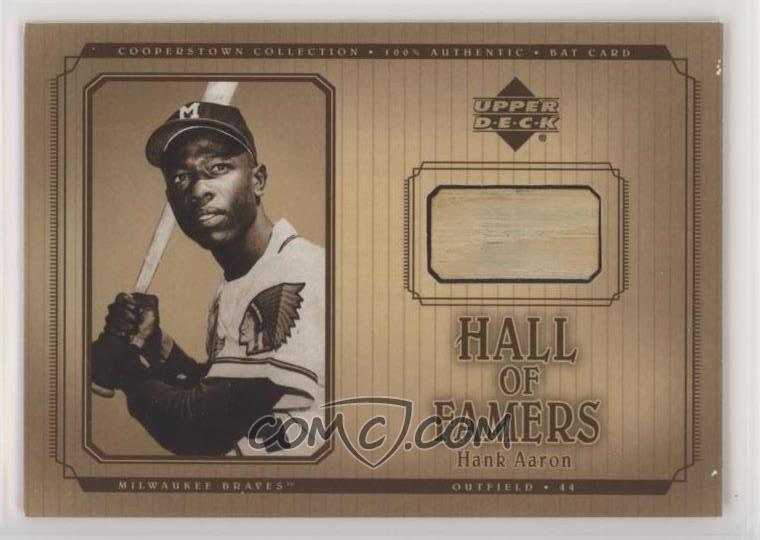
In fact, as a result, I've been inspired to add a few more cards to my collection. Bob Gibson is already there, but lately I've added cards of Stan Musial, Hank Aaron, and Casey Stengel, and have been looking for others mentioned in the book.

October 1964 and Summer of '49 by Halberstam bookend the Yankees dynasty, and probably would be best read as a set. I'm not sure how exactly Teammates, about the 1940s Red Sox, would fit in as a trilogy. But I am much more interested in '49 at this point, and the stories I hope it has to tell as well. And as a bit of a history fan, I have to think that some of his other books might be worth checking out at some point as well.

TL;DR: October 1964 is a great read, and I highly recommend it for the stories about the personalities, even more so than the overall story the book tells. 

Sunday, January 12, 2020

Not-Card Flipping: Books Past, Present, and Future

I love reading. I guess that's obvious from the fact that I blog - reading and writing go together quite well. I suppose my love of movies should have spurred an interest in making YouTube videos by now, but for now, I'll stay behind the keyboard, not in front of the camera.

I really haven't had much time for books, though reading blogs and online articles has kept me active. When I went back to the US about a year ago, I found a few more books to add to my collection, but they didn't make the trip with me back to Japan.

That's okay, because I've had several books waiting here. I've started a couple and never got through them all, but that didn't stop me from picking up a few more over the New Years holidays.
 On my long (four hour) train ride to Akita in early December, I finally finished this book. Satchel Paige's America follows Paige around for a few days long after he left the MLB, but while he was still barnstorming. It's an interesting look into his mind, as it's mostly relaying Paige's stories via interview.
 I didn't have another book to read when I returned home for the vacation, but I grabbed a couple to read this month. Old Time Baseball Trivia is a simple trivia book I picked up at an independent bookstore in Tokyo earlier this month. I didn't really look too much into what was inside the book; about half of the pages are trivia questions (generally multiple choice, sometimes matching or true-false). The other half are the answers and the stories behind the events. It spans The Babe Ruth Era, as you could possibly tell by looking at the top of the book cover, so there are several questions about Ruth and the Yankees, but there are also interesting questions about more-obscure records and players during World War II.

I managed to finish this book in less than three hours, cover to cover. And that included some pauses to have my light dinner, do a little internet searching based on what I read, and just take a couple breaks to rest my eyes. My knowledge of pre-Mantle baseball is limited, but I still did better than I thought when answering the questions.

The book offers up some interesting tidbits, and it's provided some ideas for posts or even a topical trading card set or collection. So while it went by quick just reading the book, I'll probably go back through in more detail later.
 I've had October 1964 for a long time. I think I bought this book about five years ago at a used book store in Tokyo. I carried it with me to Sapporo in 2018 but never cracked it open. I will finally start reading it in a couple weeks when I have yet another four hour train ride.
 Over the holidays, I bought a total of eight new baseball books. These two trivia books will probably bring me as much enjoyment as the Old Time Baseball Trivia book above; I'll probably be able to read through them pretty quickly, but go back and really look into the stories in the future. I left them in Tokyo, but at least one of these will join me on my next trip.
 I just happened to see You Gotta Have Wa sitting on the shelf. It's a baseball book, but it's more about Japanese culture and how it applies to baseball in this country, so it was actually filed in the "Japan culture" section. The book originally came out in 1989, and Japan has changed a lot since then. But when I finally get to read it, I'm sure I'll be able to relate. I was surprised to find I hadn't picked it up until now.
 Dick Williams was before my time, but No More Mr. Nice Guy promises to have candid stories about baseball players before the steroid era. I originally wasn't going to buy it, but the price was right, and I had been shut out on baseball books at the prior two stores I had visited. Based on the reviews I've seen, I made a good purchase. Only time will tell.
 Oddly enough, I bought two managerial biographies. Don Zimmer gets to tell his stories in Zim: A Baseball Life. Looking at the cover, you wouldn't expect much, but again the reviews point to a decent read.
 I enjoyed the movie Moneyball, though I've yet to read the book. Moneyball is about statistics helping to build the best team. Intangiball is the response to that - things outside of numbers that can influence a team. If Moneyball is progressive, Intangiball is conservative. Moneyball talks about measurable things - statistics. Intangiball gives anecdotal evidence - intangible, unproven happenstances. I have lower expectations for this book than the others, but if nothing else it'll give me something to think about. Let's see if I can finish it, huh? This was another book I found at a price too good to pass up.
Finally, Astroball. Where Intangiball seems to be the argument against Moneyball, Astroball seems to be the true sequel to Moneyball. But again, we shall see. The book focuses on how the Astros put together a World Series-caliber team. Since it was published in the summer of 2018, given some recent accusations, I'm not sure how accurate it will be. But it should make for a good read anyway; it has very high reviews overall.

Those are 10 books currently in my library, but I must have at least 150 baseball books at this point. I haven't read most of the books I have, I think, because while I pick up books as I can, I just don't read as much as I'd like.

Perhaps I can change that this year. Okay, new goal decided right now: read at least one book a month. I guess that trivia book counts, since I read it a week ago; one down, eleven (or more) to go. Mickey Mantle, here I come...

Are you reading any baseball books right now?